


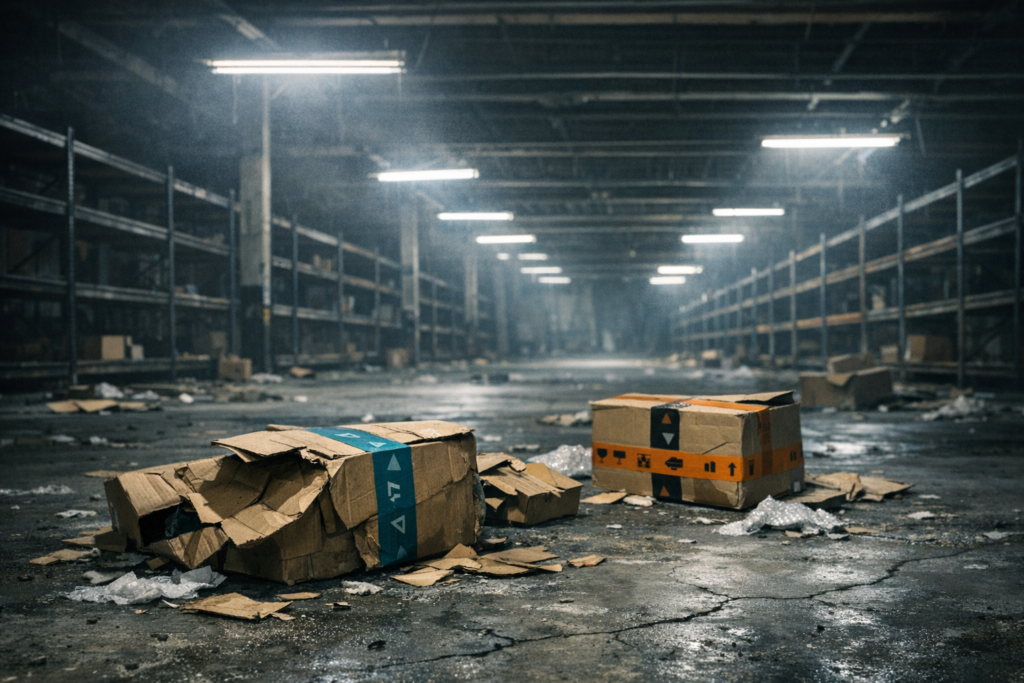
It was supposed to be a turning point.
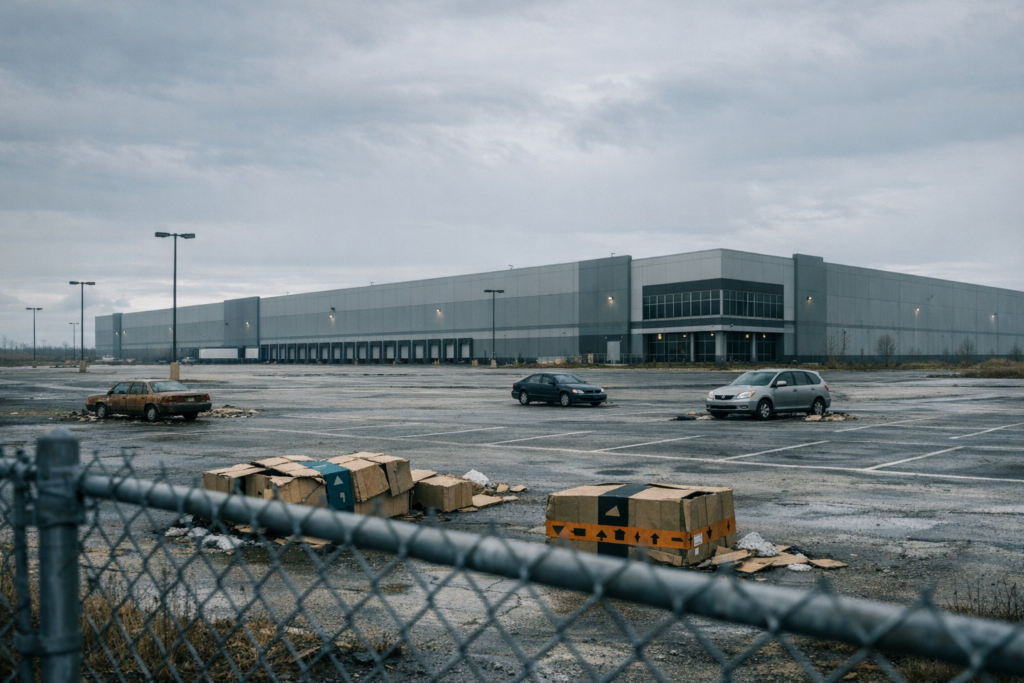
When Amazon announced it would open a massive fulfillment center at the Port of Little Rock, Arkansas, city officials celebrated. The five-story, 3.6 million square foot facility — the largest Amazon fulfillment center in the state — promised thousands of jobs for a region that needed them. It opened in 2021 with great fanfare. By October 2025, it was shuttered indefinitely.
For Antoinequa Walton, a 25-year-old Pine Bluff resident who had spent two months unemployed before landing a job there, the closure was a gut punch. “Before I started working at Amazon in July, I was already out of a job for two months. It’s hard to find a job, so going to Amazon was a relief. I finally got to start catching up on stuff,” she told the Arkansas Democrat-Gazette. “With it shutting down again, it’s another setback.”
Her anxiety cut straight to the bone. “If I don’t find another job in 90 days, then what?”
It’s a question being asked in communities across America.
The Great Seduction
Amazon has long understood something that city mayors and economic development officers desperately want to believe: the promise of jobs is one of the most powerful forces in local politics.
When Amazon comes calling, communities roll out the red carpet. Tax incentives, zoning variances, infrastructure upgrades, sweetheart land deals. According to subsidy watchdog Good Jobs First, Amazon has received more than $4.18 billion in government incentives across the United States alone. Cities don’t just welcome Amazon — they compete for it, outbidding each other for the privilege of hosting a warehouse.
The pitch is seductive: thousands of jobs, starting wages above the local average, benefits from day one. For struggling post-industrial communities, it can seem like a lifeline.
But economists have been quietly raising red flags for years. Research from the University of Wisconsin found that given the enormous investment required to attract an Amazon warehouse, the actual impact on private-sector employment “does not justify the investment.” A separate Wharton School study found that while Amazon’s entry into a market does increase employment rates, the gains are modest — and the jobs created are heavily concentrated in warehousing and logistics, not the broader economic ecosystem that cities hoped for.
In other words: you get a warehouse. Not a renaissance.
The Pandemic Binge
To understand why so many communities now find themselves holding the bag, you have to understand what happened between 2020 and 2022.
As COVID-19 kept millions of Americans home and online shopping exploded, Amazon went on one of the most aggressive corporate expansion sprees in modern business history. The company’s warehouse footprint nearly doubled, growing from roughly 272 million square feet at the end of 2019 to more than 525 million square feet by the end of 2021. Facilities were promised, planned, and built at a dizzying pace. Communities that had been courting Amazon for years suddenly found their wishes granted — shovels in the ground, ribbon cuttings on the calendar.
Then reality hit.
By early 2022, as inflation rose and consumers returned to stores, e-commerce growth stalled. Amazon found itself, in the words of its own CFO Brian Olsavsky, with “too much space versus our demand patterns.” The company began quietly unwinding what it had built. By early 2023, logistics consultancy MWPVL International had tracked 99 U.S. facilities that Amazon had canceled, closed, or delayed — impacting nearly 32.3 million square feet of space across 30 states.
Ninety-nine communities. Thirty states. Thousands of workers.
The Collateral Damage Nobody Talks About
When Amazon comes to town, it doesn’t just bring jobs. It brings an entire ecosystem of economic activity — and when it leaves, it takes most of that ecosystem with it.
The pattern is consistent and well-documented. A new fulfillment center opens and the immediate area transforms almost overnight. Developers break ground on apartment complexes to house the influx of workers. Restaurants, gas stations, convenience stores, and fast food chains cluster around the facility to capture the foot traffic of thousands of daily employees. Hotels fill up with trainers, contractors, and corporate visitors. Local governments — flush with optimism and the prospect of new tax revenues — approve zoning changes, fast-track permits, and occasionally invest in new road infrastructure to handle the surge in truck traffic.
For a while, it works. Home values rise, rents climb, and new support businesses spring up to serve the growing workforce. Local officials point to the facility as proof that their economic development strategy is paying off.
Then the facility closes.
The restaurants that opened to serve Amazon workers suddenly find their lunch rush has evaporated. The apartment complexes built to house employees face rising vacancies. The road improvements paid for by taxpayers remain, but the tax revenues that were supposed to justify them don’t. Local businesses that never received the public-funded infrastructure advantages Amazon enjoyed now face higher costs with fewer customers — a double blow that many simply cannot survive.
The numbers behind this dynamic are staggering. In North Andover, Massachusetts, Amazon received $27 million in public funding to build a single warehouse. In Windsor, Connecticut, it was $8.8 million. In Glenwillow, Ohio, the property taxes on a new Amazon distribution center were reduced by nearly half for 15 years. These are not isolated examples — they represent a nationwide pattern of cities competing against each other to hand Amazon the most generous deal possible.
The retail damage compounds the problem further. A 2015 analysis found that Amazon sales had already displaced retail outlets that would have collectively paid $528 million in property taxes — taxes that fund schools, fire departments, and road maintenance. When an Amazon facility then closes, the city has lost on both ends: the traditional retail that Amazon displaced is gone, and the warehouse tax revenues it was promised never fully materialized or have now disappeared.
A study of Amazon’s operations in Southern California found that for every $1 in wages Amazon warehouse workers earned, they received 24 cents in public assistance — meaning taxpayers were effectively subsidizing Amazon’s workforce costs on top of the direct incentives already granted to the company.
The cruel irony is that the very infrastructure built to support Amazon — the roads widened for truck traffic, the utilities upgraded to handle industrial loads, the zoning changed to accommodate massive warehouses — often leaves communities less attractive to the diverse mix of smaller businesses that might have provided more stable, long-term economic foundations. You’ve essentially rezoned your town for one tenant. And that tenant just handed back the keys.
“A Sour Taste in Your Mouth”
For the workers inside these facilities, the closures weren’t abstractions on a spreadsheet. They were shattered plans and canceled holidays.
Tonya Banks had worked at the Little Rock facility for nearly three years. When the building was initially closed in October 2025 — Amazon said it needed repairs — she assumed it was temporary. “We all felt like, the 21st — we’re going to see each other again,” she said. When workers were notified the building would not reopen, the reality landed hard. “I won’t be shopping on Black Friday,” Banks told local news outlet KARK. “I won’t be buying anything.”
Georgia Wagner had received her offer letter to return to work at the same facility for October 30. On October 29, she got a phone call. “Very disappointing,” she said. “It puts a sour taste in your mouth for the company in general.”
Amazon, to its credit, offered affected workers 90 days of full pay, six months of medical benefits, transfer opportunities, and severance for those who couldn’t find new roles. The company framed the Little Rock closure as a structural engineering failure — design firm Stantec had made errors that left the building unable to meet seismic safety codes. But for workers in communities where transfers to other Amazon facilities meant relocating 50 miles or more, the corporate safety net had real limits.
And the Little Rock story wasn’t an isolated incident. In California alone, Amazon closed or scaled back facilities in Stockton, West Sacramento, Irvine, and San Francisco in just a two-year span — leaving city budgets that had been built around projected tax revenues suddenly short, and workers who had turned down other opportunities suddenly scrambling.
The Bigger Question
None of this means Amazon is the villain of the piece. The company employs hundreds of thousands of Americans, pays competitive wages, and — in many markets — genuinely does add economic value. Research published in late 2024 found that Amazon’s entry into a metro area increases the total employment rate and average wages, though modestly.
The problem isn’t Amazon. The problem is the deal.
When a city hands a trillion-dollar corporation millions in tax breaks, remakes its zoning laws, and restructures its entire economic development strategy around a single employer — and that employer is free to leave whenever its network optimization spreadsheet says so — the city has taken on all the risk and Amazon has taken on none.
Cities love the positive press around new jobs, the influx of new residents, and the boost to the local economy. What they don’t always calculate is what happens when the company decides it no longer needs them.
Greg LeRoy, executive director of Good Jobs First, has spent decades studying corporate subsidy deals. His organization’s data paints a consistent picture: the companies with the most leverage extract the most generous deals, and the communities that need jobs most desperately — the ones with the fewest alternatives — are often the ones that give away the most.
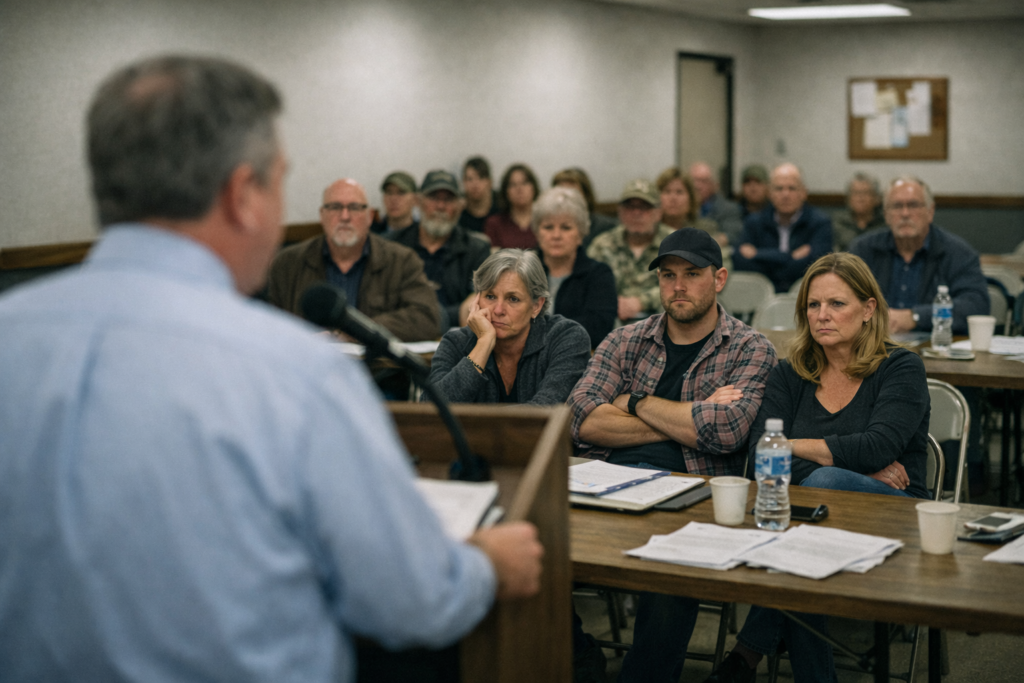
Negotiations over these deals are frequently conducted behind closed doors, with local officials bound by nondisclosure agreements that prevent residents and local businesses from having any say in how their public resources are being committed. By the time the ribbon is cut, the terms are locked in.
What Smarter Looks Like
Some cities are starting to push back — or at least, bargain harder.
Economic development experts increasingly recommend that communities negotiating with large employers include clawback provisions: requirements that companies return tax incentives if they fail to maintain promised employment levels for a specified period. They also recommend that cities avoid over-relying on any single employer, no matter how big or how promising they seem at the ribbon cutting.
Others suggest that before approving major subsidies, cities commission independent economic impact studies — not the ones paid for by the company seeking the incentives, but genuinely independent analyses that account for the displacement of existing businesses, the infrastructure costs, and the long-term fiscal risks of single-employer dependency.
The irony is that the communities best positioned to attract major employers — those with strong infrastructure, educated workforces, and diversified economies — are often the ones who need them least. The communities that need them most are the ones with the least negotiating power.
What It Really Costs: By The Numbers
| $6.3 billion | Total tax breaks and subsidies Amazon has received from U.S. state and local governments over two decades |
| $4.18 billion | Amazon subsidies tracked by Good Jobs First in the U.S. alone |
| $528 million | Property taxes lost annually as Amazon displaced traditional retail outlets |
| 99 | U.S. facilities closed, canceled, or delayed by Amazon since 2022 |
| 30 | States impacted by Amazon facility closures |
| 4,600 | Workers affected by the Little Rock closure alone |
| 24 cents | Public assistance received per $1 of wages earned by Amazon warehouse workers in Southern California |
| $27 million | Public funding Amazon received to build a single warehouse in North Andover, Massachusetts |
The Human Ledger
For Antoinequa Walton in Pine Bluff, the policy debates feel distant. She is doing what she said she would: applying for jobs. Hoping the 90 days is enough. Hoping she doesn’t end up back where she started.
“Today will be my first day applying for other jobs,” she said, the morning the closure was announced.
She wasn’t the only one.
Across America, in Little Rock and Stockton, in West Sacramento and Bensalem, in dozens of communities that bet their economic futures on a company that had no contractual obligation to stay, the math is coming due. The warehouses sit empty. The restaurants are quieter. The apartment vacancies tick upward. And the next Amazon recruiter is already on the phone with the next city council, making the same promises.
The question is whether anyone is listening differently this time.
Business Trends Magazine covers the people and forces shaping the American economy. Have a story tip or want to share your community’s experience? Contact us at editorial@businesstrendsmagazine.com